
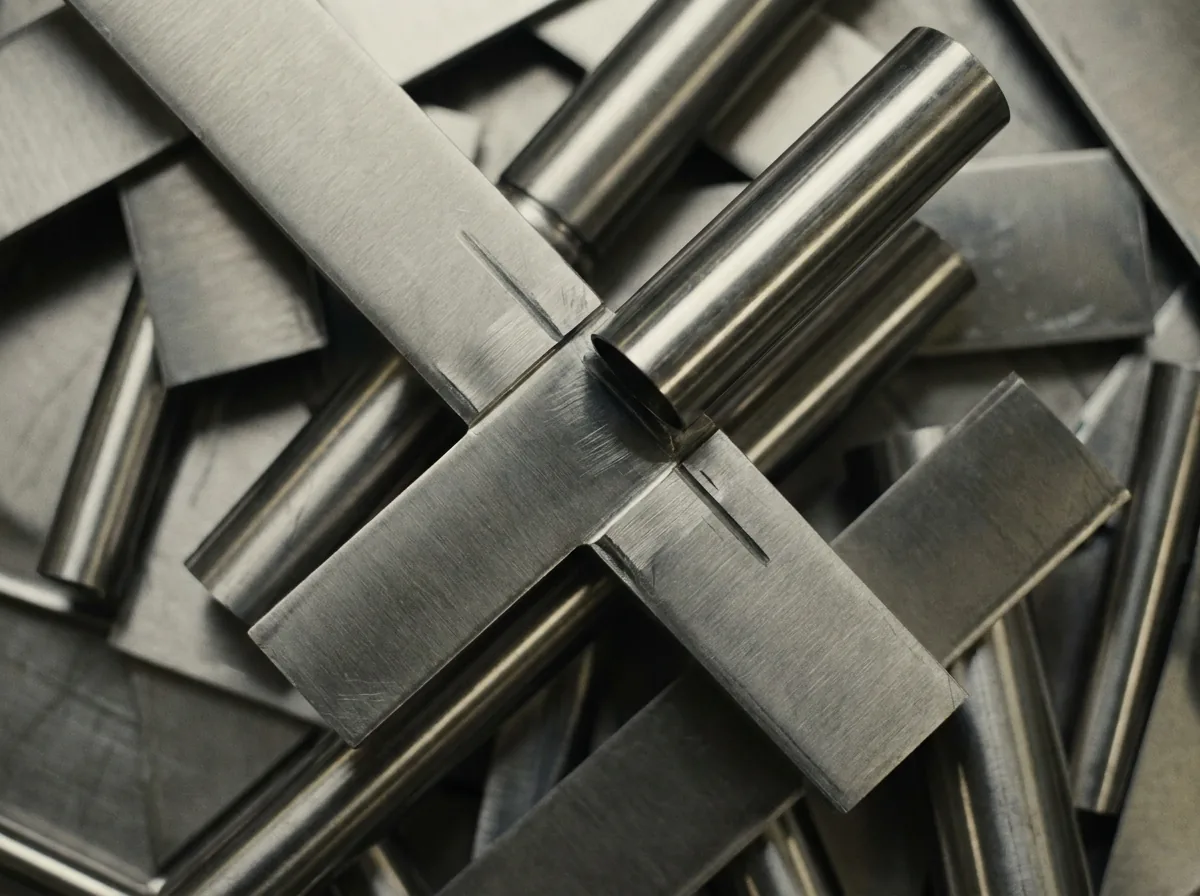
Aerospace alloy scrap — aluminium, titanium and nickel
Do you make or machine parts for aerospace? Aluminium alloys of the 2xxx and 7xxx series, titanium, nickel alloys and superalloys are among the highest-priced non-ferrous metals on the market — and their value hinges on the exact grade. We assess the grade by eye first, confirm unusual alloys with a handheld spectrometer, price against current market quotations, and when needed collect with our own transport on larger loads and sell straight to smelters and foundries.
What we take from the aerospace industry
The aerospace industry generates one of the most valuable non-ferrous streams on the market — and also the most demanding when it comes to identifying the grade. A 7075 aluminium alloy, Ti-6Al-4V titanium and a nickel superalloy are three entirely different price tiers, and the difference often isn’t visible to the eye. That’s why we confirm an unclear alloy with a handheld spectrometer at the branch — you get paid for the real elemental composition, not for a blended “alloy mix”.
We serve machining plants and aerospace-industry subcontractors — from precision cutting of structural parts to component manufacturing. Whether you hand over sorted titanium turnings, aluminium sheet offcuts or certified batches withdrawn from production, we separate every alloy, document the delivery and settle it so that waste disposal doesn’t clash with your quality requirements.
The most common non-ferrous streams from machining and manufacturing aerospace parts. Not sure of the grade? The spectrometer settles it — a photo is enough to start.
Aircraft aluminium alloys (2xxx/7xxx)
High-strength aluminium alloys of the 2xxx (Al-Cu) and 7xxx (Al-Zn) series — sheet, bar, milled parts; classified separately from ordinary profile, because the grade strongly drives the rate.
Titanium and titanium alloys
Technical titanium and alloys (e.g. Ti-6Al-4V) — sheet, bar, parts and turnings; a high-value material priced after composition analysis.
Nickel alloys and superalloys
High-nickel alloys and heat-resistant superalloys from fittings and sections running at high temperatures — one of the highest-priced fractions, settled after elemental measurement.
Turnings and machining offcuts
Waste from cutting and milling aerospace parts — aluminium, titanium and nickel; we separate it by alloy and price by cleanliness and moisture (emulsion lowers the grade).
Certified production batches
Parts and material withdrawn from production that require documented, separated disposal — we take them with traceability preserved and full documentation.
Sheet and structural parts
Offcuts and production parts from aluminium and titanium sheet — clean material with a good yield, settled separately for each metal.
How we collect material from aerospace
A high-value alloy can’t wait for a by-eye quote or sit around the shop floor. We agree the terms and classification once, and then collection runs in the background of your production.
Show us the material and documentation
Call or send photos on WhatsApp. The alloy type and a rough quantity are enough to give an initial rate; for certified batches we agree the documentation requirements up front.
We classify and price
We confirm unclear alloys with a handheld spectrometer — telling a 2xxx alloy from a 7xxx, titanium from a nickel superalloy. We price against current market quotations and grade, and for repeat deliveries we agree terms and — from a few tonnes up — can send our own transport.
We weigh and settle
We weigh in front of you on authorised scales, you get the documents appropriate to the delivery and a traceable settlement with no surprises. The material goes straight to smelters and foundries.
Related groups and knowledge
The aerospace industry is mostly aluminium and special metals (titanium, nickel) — we classify and settle each alloy separately, so the more valuable fraction isn’t lost in the mix.
Worth knowing
Aerospace — frequently asked questions
How do you confirm the grade of an aerospace alloy?
The grade is assessed by experience first, and an unclear alloy is confirmed with a handheld spectrometer at the branch. The elemental measurement tells a 2xxx (Al-Cu) aluminium alloy from a 7xxx (Al-Zn), and titanium from a nickel superalloy — three entirely different price tiers whose difference often is not visible to the naked eye.
Do you accept certified batches withdrawn from production?
Yes. Parts and material withdrawn from production that require documented, separated disposal are taken with traceability preserved and with full documentation. The documentation requirements for such batches are agreed up front, before collection.
Are titanium and nickel turnings worth anything?
Yes — they are among the higher-priced fractions. Waste from cutting and milling aerospace parts is separated by alloy and priced by cleanliness and moisture from emulsion. Turnings sorted at source and dry reach a higher grade than a mix of alloys.
Do you separate the alloys, or settle the batch as a mix?
Every alloy is classified and settled separately, precisely so that the more valuable fraction is not lost in the mix. You get paid for the real elemental composition, not for a blended “alloy mix”.
Which aerospace alloys do you buy?
Mainly high-strength aluminium alloys of the 2xxx and 7xxx series (sheet, bar, milled parts), technical titanium and titanium alloys (e.g. Ti-6Al-4V), high-nickel alloys and heat-resistant superalloys, as well as turnings, offcuts and sheet and structural parts from machining.
What do the documentation and settlement of a delivery look like?
The material is weighed in the supplier’s presence on authorised scales, and the settlement is traceable. Full documentation is handed over after delivery; if the transfer is subject to the waste register, the KPO in BDO is created by the transferor before transport, and Odylion confirms receipt and the actual mass.