
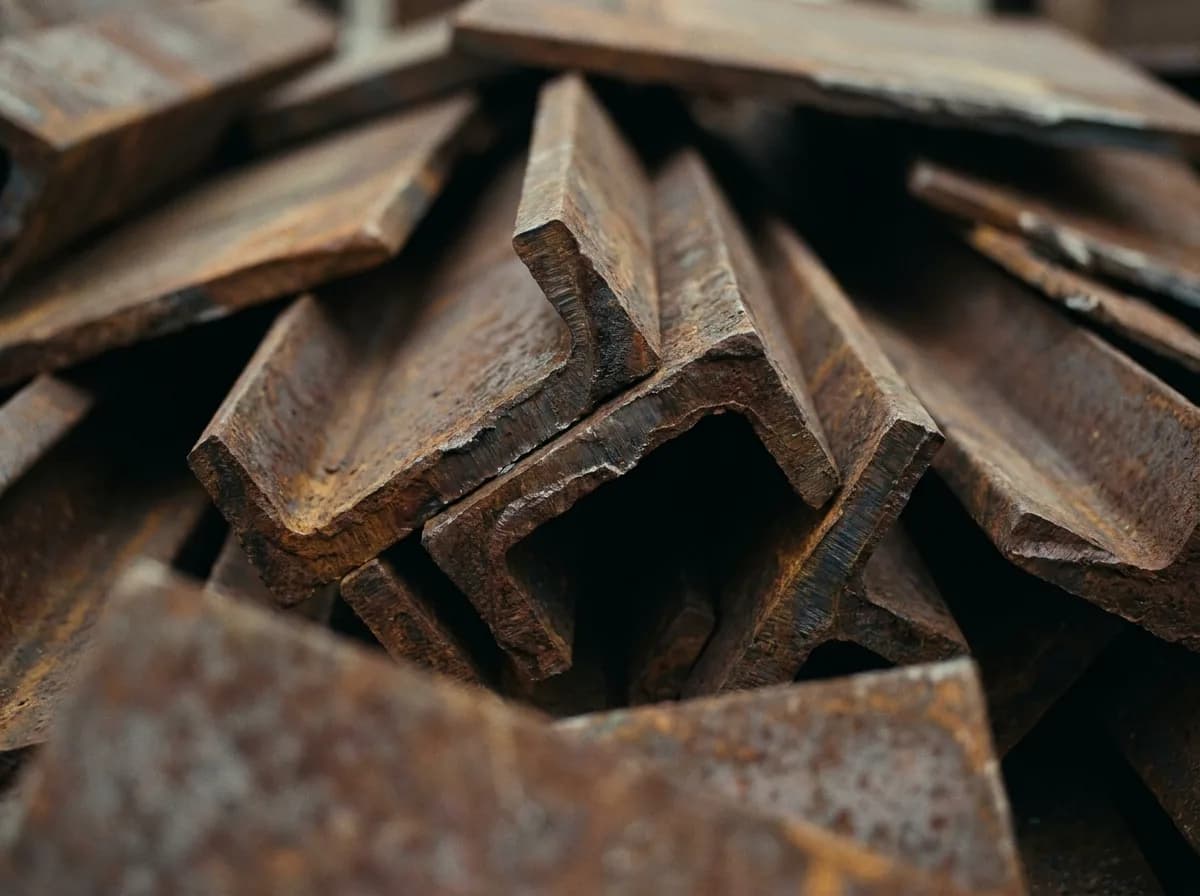
FERROUS SCRAP
Ferrous scrap — heavy melting and light grade
Ferrous scrap is a supplementary material for us, but we handle it expertly. We most often buy heavy melting steel (grade W2) and light/shredder-grade steel (grade N10) — with fair classification and collection of larger loads.
What we buy in ferrous scrap
In ferrous scrap the grade depends on thickness and cleanliness. W2 is thick, solid melting scrap from 4 mm of wall thickness, W7 from 6 mm; N10 and N2 are the thinner, lighter light grades. We separate these grades rather than settling them at one price — and thickness is something you can check yourself before loading.
We serve manufacturing and structural plants and vehicle dismantlers. On larger loads we can arrange our own collection when needed, so steel doesn’t pile up in your yard.
The most common grades of ferrous scrap. Not sure of the grade? We’ll assess it on intake.
Heavy melting steel W2 (from 4 mm)
Thick, solid melting scrap with a wall thickness from 4 mm — the most common melting grade.
Heavy melting steel W7 (from 6 mm)
Melting scrap with a wall thickness from 6 mm — classified separately from W2.
Light-grade steel N10
Thinner, lighter ferrous scrap — including bar stock and furnace parts; classified separately from melting grades.
Light-grade steel N2
Light-grade scrap of a different form and composition than N10 — classified as its own grade.
Heavy plate
Thick-walled plate and flame-cut offcuts — a material with a good, predictable yield.
Steel structures
Structural elements, profiles and sections — after dismantling, priced by grade.
What's in it for you.
We separate heavy melting from light grade
W2 and N10 have different values. We classify them separately, so thicker scrap isn’t settled like light small pieces.
Own collection when needed
Larger quantities of steel we can collect with our own transport when needed. You don’t have to arrange haulage or keep scrap in the yard longer than necessary.
Documents appropriate to the delivery
After delivery we provide settlement documents and confirm the required information on our side. The document scope depends on supplier status and waste type.
Where to sell your ferrous scrap
We accept ferrous scrap at every Odylion branch; for larger quantities, confirm intake capacity and logistics in advance.
- Warszawa TargówekPrzecławska 2, 03-879 Warszawa · +48 516 041 683
- OtwockKraszewskiego 2A, 05-400 Otwock · +48 601 336 906
- ŁódźOkopowa 70/106, 91-849 Łódź · +48 506 054 883
- Poznań (Gądki)Zbożowa 1a, 62-023 Gądki · +48 505 118 482
- WrocławOpolska 19c, 52-010 Wrocław · +48 609 889 966
- BędzinSielecka 63, 42-500 Będzin · +48 601 367 273
- Gdynia (Trójmiasto)Handlowa 10, 81-061 Gdynia · +48 504 231 190
- Biała Podlaska · Jana Pawła IIal. Jana Pawła II 200, 21-500 Biała Podlaska · +48 602 892 944
- Biała Podlaska · BiałkaBiałka 59, 21-500 Biała Podlaska · +48 501 492 204
Quality standards
We accept ferrous scrap sorted by grade and free of large contaminants (concrete, rubber, plastics). Cleaner, better-separated material means a higher grade and a smoother settlement.
Every sealed item has to reach us opened: containers, shock absorbers, car bodies and fire extinguishers are accepted only cut open or with at least two openings. Do not open anything yourself that may be pressurised or hold an unknown substance — shock absorbers and fire extinguishers have to be safely depressurised first. We do not accept hazardous materials or the packaging they came in, paint containers for example. A single item should stay within 200 kg and 1500 × 500 × 500 mm.
We accept ferrous scrap at every branch. For a larger delivery, confirm intake capacity and logistics in advance by phone or in the quote form.
Ferrous scrap — frequently asked questions
What is the difference between heavy melting W2 and light grade N10?
Above all the wall thickness, and with it the grade. W2 is thick, solid melting scrap from 4 mm of wall thickness; W7 is a separate melting grade accepted from 6 mm. Light grade is thinner and lighter material — N10 covers bar stock and furnace parts among others, while N2 is classified separately. Grades are separated on intake, so thicker scrap is not settled like light small pieces, and thickness is a criterion the supplier can check before loading.
Do you accept ferrous scrap at every branch?
Yes, ferrous scrap is accepted at every Odylion branch. For a larger delivery it is worth confirming the branch’s intake capacity and logistics in advance, by phone or in the quote form.
How should ferrous scrap be prepared for delivery?
Sorted by grade and free of large contaminants — concrete, rubber and plastics. Cleaner, better-separated material means a higher grade and a smoother settlement on intake.
Do you collect larger steel loads from the yard?
When needed, yes — on larger quantities collection with our own transport is possible, agreed individually on the basis of the quantity, type of material and location. You then don’t have to arrange haulage or keep scrap in the yard longer than necessary.
How should fire extinguishers, shock absorbers and sealed containers be prepared?
They have to arrive opened. Fire extinguishers, shock absorbers, car bodies and any sealed containers are accepted only cut open or with at least two openings, because a sealed item under pressure risks exploding when cut and when melted. For the same reason, do not open anything yourself that may be pressurised or hold an unknown substance — shock absorbers and fire extinguishers have to be safely depressurised first, and if you are not equipped for that, ask us before delivery. Hazardous materials and the packaging they came in, paint containers for example, are excluded from delivery.
What documents will I get after delivering ferrous scrap?
After delivery you receive settlement documents, and the required information is confirmed on Odylion’s side as the recipient. The document scope depends on supplier status and on the type and quantity of waste; if the transfer is subject to the waste register, the KPO in BDO is created by the transferor before transport.