
CABLE AND WIRE SCRAP
Cable and wire scrap
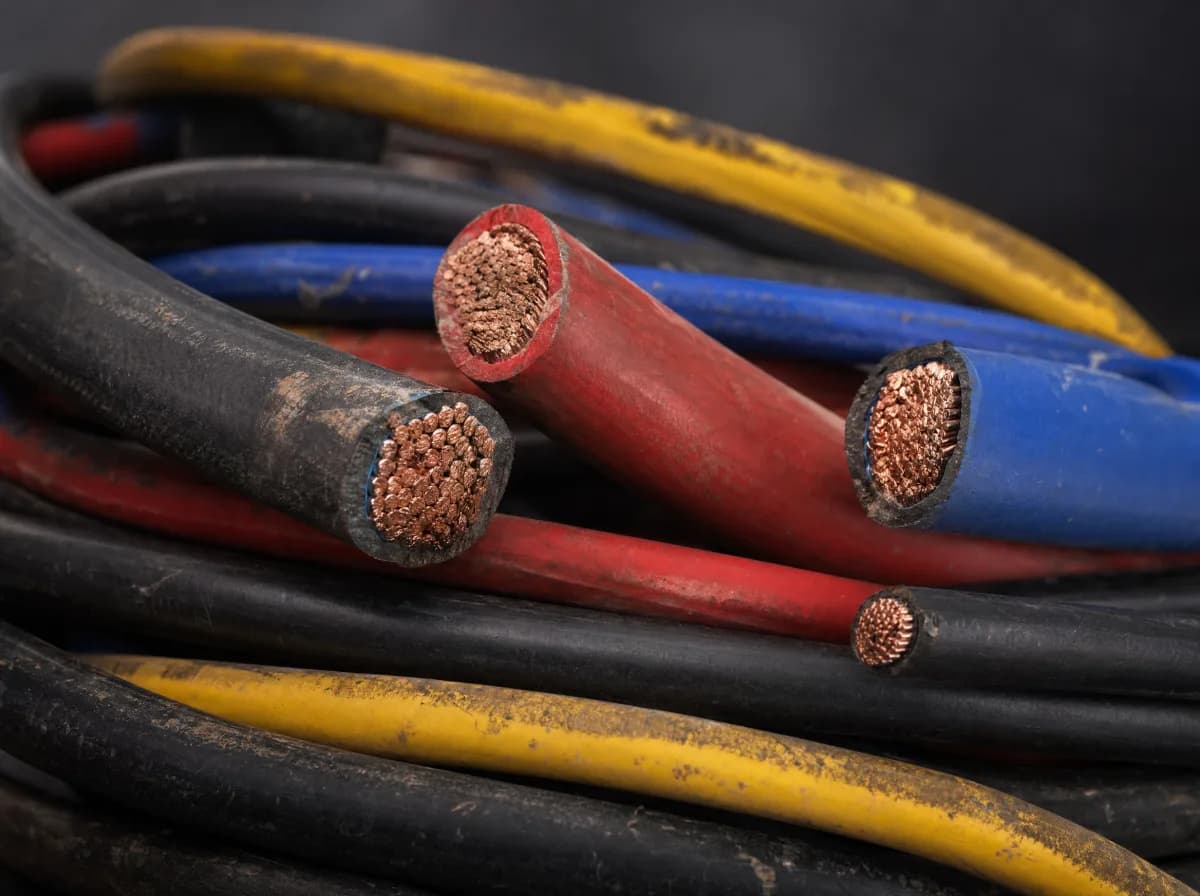
Cables are a market we are deliberately growing. We buy copper and aluminium cable, automotive harnesses and overhead conductor — priced by the real metal yield.
What we buy in cables
A cable’s value comes from the metal under the insulation — and its share varies widely. A thick power cable, a thin automotive harness and an aluminium conductor have different yields, so we settle them by copper or aluminium content, not by gross weight with the insulation.
We serve power utilities, electrical plants, vehicle dismantlers and independent scrap yards. On larger cable loads we settle the yield after granulation — you get a price for the clean metal.
Cable by metal type and yield. Don’t know the copper content? We’ll assess it for you.
Copper installation cable
Cable from building and industrial installations — high, predictable copper yield.
Power cable
Thick copper and aluminium supply cable — settled by cross-section and yield.
Automotive wiring harnesses
Electrical wiring harnesses from vehicles — thin insulated copper. Material above 40% copper content is classified separately from installations poorer in metal.
Overhead aluminium conductor
Overhead conductor — clean and oily aluminium conductor classified separately, steel-cored conductor (ACSR/AFL) by the core; free of connectors and fibre-optic cores.
Cable for granulation
Mixed insulated cable — settled after metal recovery in the granulation process.
What's in it for you.
You pay for the metal, not the insulation
We price by the real copper or aluminium yield, not the gross weight. On larger loads, settlement after granulation is fully transparent.
We take harnesses and thin cable
Automotive harnesses and thin cable, not always welcome elsewhere, are a fully-fledged material here with a fair yield assessment.
We are growing this market
Cables are a direction we deliberately invest in. Regular cable suppliers get predictable terms and a fast decision here.
Where to sell your cables and wires
We buy cables and wires at every non-ferrous branch. For large quantities, ask about granulation and our own collection.
- Warszawa TargówekPrzecławska 2, 03-879 Warszawa · +48 516 041 683
- OtwockKraszewskiego 2A, 05-400 Otwock · +48 601 336 906
- ŁódźOkopowa 70/106, 91-849 Łódź · +48 506 054 883
- Poznań (Gądki)Zbożowa 1a, 62-023 Gądki · +48 505 118 482
- WrocławOpolska 19c, 52-010 Wrocław · +48 609 889 966
- BędzinSielecka 63, 42-500 Będzin · +48 601 367 273
- Gdynia (Trójmiasto)Handlowa 10, 81-061 Gdynia · +48 504 231 190
- Biała Podlaska · Jana Pawła IIal. Jana Pawła II 200, 21-500 Biała Podlaska · +48 602 892 944
- Biała Podlaska · BiałkaBiałka 59, 21-500 Biała Podlaska · +48 501 492 204
Quality standards
We accept cable sorted by metal type and thickness as far as possible — clean installation cable is a different grade than a mix with a lot of insulation.
The metal yield of unusual loads we assess on the spot, and with granulation we settle after recovery. We don’t estimate copper content blind.
Cables and wires — frequently asked questions
Do you price cable by gross weight including the insulation?
No. A cable’s value comes from the metal under the insulation, and its share varies widely — a thick power cable, a thin automotive harness and an aluminium conductor have different yields. Settlement is therefore based on the real copper or aluminium content, not on the gross weight together with the insulation. The practical classification line runs at 40% copper content: material richer in metal is settled in a higher grade than installations poorer in metal.
Do you have to strip the insulation before selling?
No, you don’t. Cable is accepted insulated, and on larger loads the yield is settled after granulation. It is worth sorting cable by metal type and thickness as far as possible, though — clean installation cable is a different grade than a mix with a lot of insulation.
How does settlement after granulation work?
Mixed insulated cable goes into the granulation process, where the metal is separated from the insulation, and settlement follows the recovery — you get paid for the clean metal that actually came out of the load. The copper content is then not estimated blind.
Do you accept automotive harnesses and thin cable?
Yes. Vehicle electrical wiring harnesses and thin cable, not welcome everywhere, are a fully-fledged material here — thin copper in insulation, whose yield is assessed separately.
How do you classify AFL overhead conductor?
By the core. Steel-cored aluminium conductor (AFL) has a steel core, which is not aluminium — so it is classified separately from clean and oily aluminium conductor, which are themselves settled apart from each other. Acceptance within the grade requires material free of connectors and of any woven-in fibre-optic core; both have to be separated out, as neither is a non-ferrous metal.