
ALUMINIUM SCRAP
Aluminium scrap — profiles, sector and castings
We know aluminium in every grade — from clean sector and PA38 profiles to castings and radiators. We grade every delivery separately, so you get paid for exactly the grade you have, not a blended “aluminium mix”.
What we buy in aluminium
Aluminium can look alike yet price very differently: a clean PA38 profile sits on another shelf than alloyed foundry castings or a radiator with copper residue. We classify every load separately, so you get paid for the grade you actually deliver — not a blended “aluminium mix”.
We handle steady streams from aluminium joinery plants, offset print shops, vehicle dismantlers and metalworking shops. A regular supplier gets predictable pricing and a fast decision here, because we know aluminium inside out.
Behind the trade names sit specific alloy families: window profile is almost always the 6xxx series (EN AW-6060, the former PA38), AlMg sheet is the 5xxx series (5754, 5083), and castings are a separate family of EN AC casting alloys carrying some 9 to 12% silicon. Silicon, copper and zinc can be added to a melt but cannot be taken out of it — and that difference decides the grade we settle your material at.
The grades that most often reach our branches. Not sure of the grade name? A photo is enough — we handle the rest.
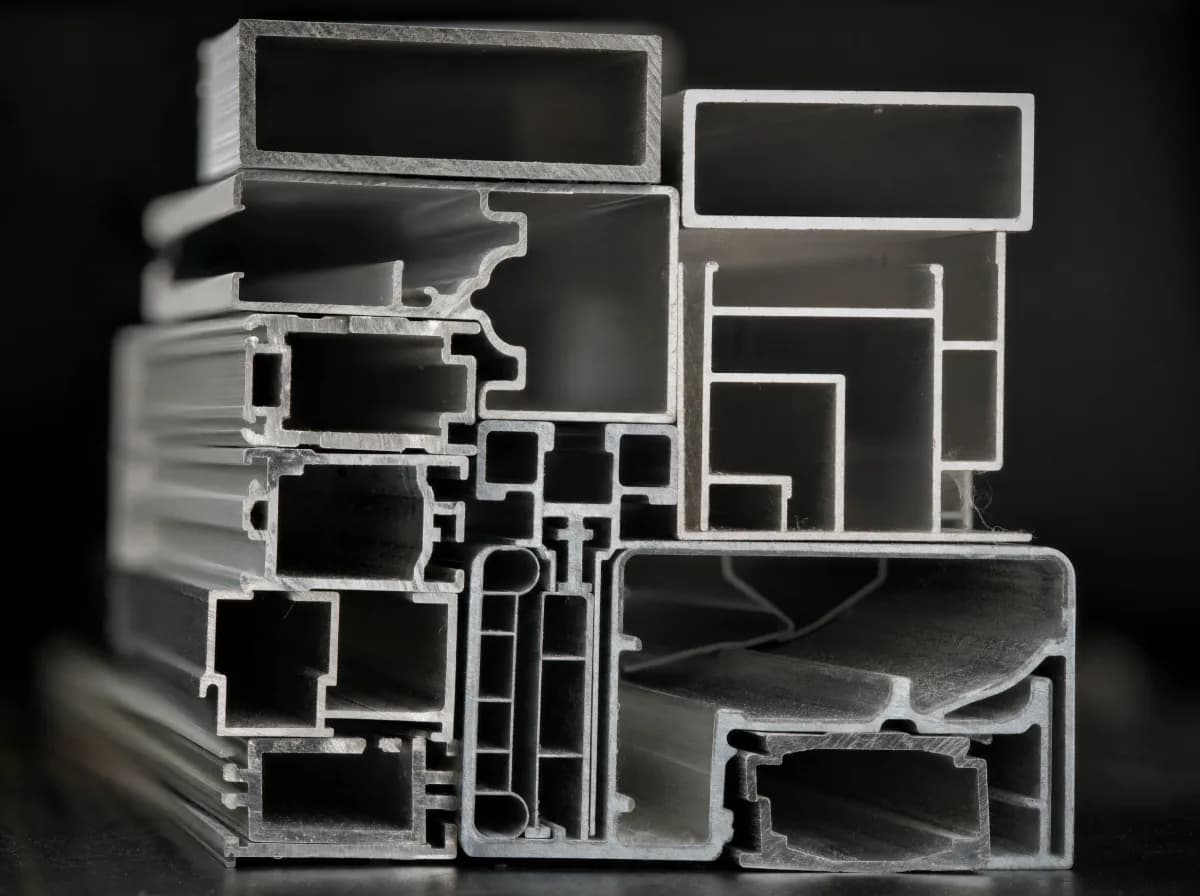
Aluminium profiles (PA38, 6060)
Clean profiles from window and structural joinery, cut to 1 m — longer ones are accepted too, but they need cutting. Coated profiles and foam-filled profiles are classified separately.
Aluminium sector
The cleanest, highest-priced aluminium grade — a uniform, soft material with no admixtures.
AlMg sheet
Aluminium-magnesium alloy sheet — the 5xxx series, most often EN AW-5754 (PA11) and 5083 (PA13). Graded by thickness (below and above 5 mm) and by fraction size.
Wrought aluminium
Wrought alloys from the 5xxx and 6xxx series — sheet, pressed and formed parts, cut to 1.5 m; classified separately from die castings.
Alloy wheels
Passenger-car alloy wheels, without tyres only — settled once steel parts, bushings and lead balance weights are removed.
Aluminium castings
Engine castings, cylinder heads and housings — brittle EN AC casting alloys (e.g. AlSi9Cu3) carrying some 9 to 12% silicon, priced separately from profile. A single casting is accepted up to 50 kg and up to 50 × 50 × 120 cm; magnesium castings are graded separately.
Aluminium radiators and heaters
All-aluminium radiators, aluminium-copper radiators and Al-Cu heaters — classified by their copper content.
Offset (printing plates)
Thin aluminium sheet from print shops. Clean plates are the top grade; offset with a paper layer is classified separately and distinctly lower.
Aluminium blinds and shutters
Blind slats and window roller-shutter curtains, including foam-filled ones — the foam is accounted for in the classification.
Aluminium turnings and offcuts
Production waste from machining — priced by cleanliness and moisture (emulsion lowers the grade); free of 7xxx-series alloys and bismuth.
What's in it for you.
You get paid for the actual grade, not a blended average
We separate profile, sector, castings and radiators instead of throwing everything into one “aluminium” bag. On larger loads that difference is real money per tonne.
A shorter route to the smelter
We sell aluminium straight to smelters and foundries across Europe and the Far East. With no middlemen in between, more margin stays in the price we pay you.
A decision within one business day
We know profiles and offset inside out, so we don’t keep you waiting for a quote. On regular deliveries we agree terms up front, so collection never holds up your production.
Where to sell your aluminium
We buy aluminium at every branch that handles non-ferrous metals. Pick the nearest one, or ask about our own collection for larger loads.
- Warszawa TargówekPrzecławska 2, 03-879 Warszawa · +48 516 041 683
- OtwockKraszewskiego 2A, 05-400 Otwock · +48 601 336 906
- ŁódźOkopowa 70/106, 91-849 Łódź · +48 506 054 883
- Poznań (Gądki)Zbożowa 1a, 62-023 Gądki · +48 505 118 482
- WrocławOpolska 19c, 52-010 Wrocław · +48 609 889 966
- BędzinSielecka 63, 42-500 Będzin · +48 601 367 273
- Gdynia (Trójmiasto)Handlowa 10, 81-061 Gdynia · +48 504 231 190
- Biała Podlaska · Jana Pawła IIal. Jana Pawła II 200, 21-500 Biała Podlaska · +48 602 892 944
- Biała Podlaska · BiałkaBiałka 59, 21-500 Biała Podlaska · +48 501 492 204
Quality standards
Expertise doesn’t mean we take anything as it comes. We accept aluminium sorted as far as it can be at source — the less steel, plastic, emulsion and contamination, the higher the grade and the price.
Unusual or hard-to-identify material we check on the spot with a handheld spectrometer — you get a classification based on the real elemental composition, not a judgement by eye.
For safety reasons we do not accept parts that can explode or catch fire when melted: sealed tanks and pressure vessels, airbag gas generators, material of military origin or radioactive parts. If you have any doubt about a single item, set it aside and ask before loading.
Aluminium — frequently asked questions
What is the difference between aluminium sector, profile and castings?
Three different grades and three different rates. Sector is the cleanest, uniform and soft aluminium with no admixtures — the highest-priced grade. Profile (e.g. PA38, 6060) is aluminium from window and structural joinery. A casting is a brittle, silicon-bearing alloy from housings and cylinder heads. Odylion classifies each of these grades separately, so a load sorted at source is not settled as a blended “aluminium mix”.
Are coated profiles priced lower than uncoated ones?
Yes — these are two separate grades. An uncoated profile goes into a higher-priced grade than a coated one, which is why Odylion splits them on intake instead of settling both at a single rate. The grade is also affected by admixtures of other metals and by contamination left in the material — steel, plastics and rubber. The base grade is profile cut to 1 m; longer profiles are accepted as well, but they need cutting.
Do you have to knock the thermal break out of window profiles?
No, you don’t. Odylion classifies profiles with a polyamide (PA) thermal break separately and accounts for the break in the price, so you don’t have to remove it before delivery.
How are aluminium turnings from machining priced?
By cleanliness and moisture. Turnings from turning and milling are settled with contamination and emulsion taken into account — dry, uniform turnings are a higher grade than heavily oiled turnings or turnings mixed with another metal.
Do the wheels have to be taken off the tyres before delivery?
Yes. Alloy wheels are accepted without tyres only — Odylion does not buy the tyres themselves, as they are a separate waste stream. Settlement follows once the wheel is cleared of steel parts, bushings and lead balance weights, so you get paid for the aluminium alone; a wheel delivered with weights and steel parts still on goes into the contaminated grade.
Do offset printing plates have to be separated from paper?
It is worth doing, because this is one of the largest grade differences in the whole aluminium group. Clean offset sheet from a print shop is a uniform, highly valued material, whereas offset with a paper layer left on is classified by Odylion separately and distinctly lower. Separating the paper at source genuinely raises the value of a print-shop delivery.
Do you buy AlMg aluminium-magnesium sheet?
Yes. Aluminium-magnesium alloy sheet forms its own family and is classified by thickness and fraction size — thin sheet below 5 mm, thick sheet above 5 mm and a fine fraction are all settled differently. Foil-backed sheet is graded separately again.
What do the aluminium series 1xxx–8xxx and the EN AW designations mean?
The first digit of the four-digit EN AW designation names the main alloying element: 1xxx is commercially pure aluminium, 2xxx is alloyed with copper, 3xxx with manganese, 4xxx with silicon, 5xxx with magnesium, 6xxx with magnesium and silicon, 7xxx with zinc, and 8xxx with other elements. In scrap buying we most often meet the 6xxx series (profile, EN AW-6060 or PA38) and the 5xxx series (AlMg sheet, 5754 and 5083). Castings carry their own EN AC designations and markedly more silicon, which is why Odylion grades them separately from profile.
Why do dural and 7xxx-series alloys have to be taken out of a profile batch?
Because they bring in zinc and copper, which cannot be removed from liquid aluminium — the concentration of those elements only comes down through dilution with primary metal. Profile alloy 6060 permits at most 0.15% zinc while dural 7075 carries over 5%, so even a small admixture of aerospace parts or sports equipment pushes a batch out of spec. That is why Odylion grades such alloys separately, and why the turnings grade excludes 7xxx-series material and free-machining alloys containing bismuth.
What if I don’t know which aluminium grade I have?
A photo is enough — the branch staff assess the grade. Unusual or hard-to-identify material Odylion checks on the spot with a handheld spectrometer, so the classification rests on the real elemental composition rather than a judgement by eye.
Are there any size limits on aluminium castings?
Yes. A single casting is accepted up to 50 kg and up to 50 × 50 × 120 cm, because larger pieces do not fit the melting process at the buyer’s end. Whatever the size, a casting must not contain sealed tanks or pressure vessels, airbag gas generators, material of military origin or radioactive parts — such items risk an explosion or a fire during melting and are excluded from delivery.