
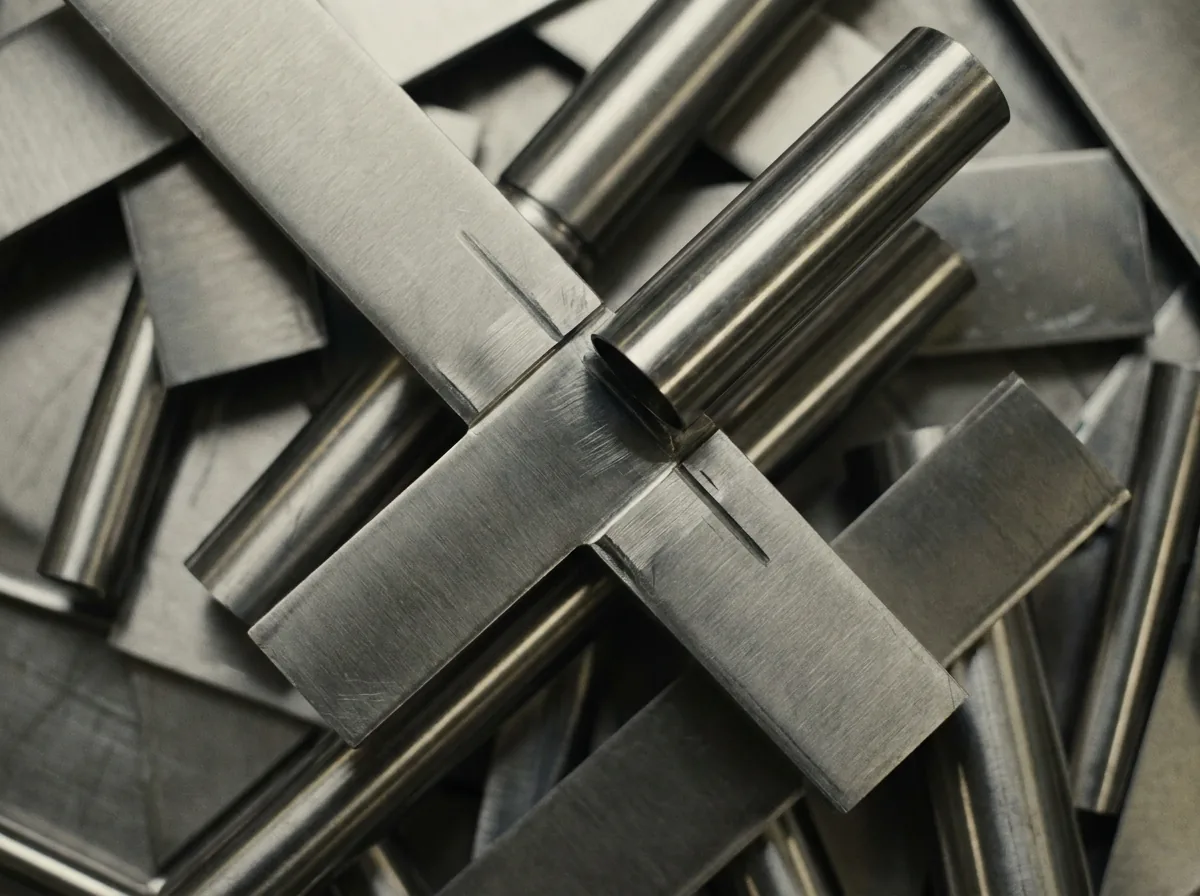
STAINLESS STEEL SCRAP
Stainless steel and special-metal scrap
Stainless, acid-resistant grades, nickel, HSS, tungsten carbide and titanium — materials where the exact composition is what counts. We classify them with a spectrometer, not by eye.
What we buy in special metals
Stainless steel and special metals are a group where the grade decides everything. CrNi 18/8, molybdenum-bearing acid-resistant stainless, pure nickel or tungsten carbide are entirely different prices — and elemental analysis settles the difference.
We serve metalworking plants, the food and chemical industries and toolrooms. With special alloys, expertise is key — and that is exactly what we base the price on.
Alloys where composition decides the price. Every doubt is settled by measurement on the spot.
CrNi 18/8–18/10 stainless steel (V2A)
Classic chromium-nickel stainless — sheet, pipe, structural parts and industrial appliances. Charge, non-charge and turnings are classified separately.
Acid-resistant stainless 18/10/2Mo (V4A)
Molybdenum-bearing acid-resistant steel (e.g. 316) — classified separately, above ordinary stainless.
Chrome steel (magnetic)
Chromium steel without nickel — grades with 11–13% and 15–17% chromium. It is magnetic and classified separately from CrNi stainless.
Nickel
Nickel cathode, nickel scrap and nickel granules — each form priced separately once the grade is established.
HSS (high-speed steel)
Tools and cutters made of high-speed steel — SW7M, SW18, SW9 and SW12 grades: drills, blades and toolroom parts.
WCL, WCLV, WLV tool steels
Pieces of hot-work tool steel — from toolrooms, forges and pressing shops; classified once the grade is established.
Tungsten carbide
Inserts and tools of sintered carbide — one of the highest-priced special materials; material with and without solder is classified separately.
Titanium
Technical titanium and alloys — turnings, sheet and pieces; priced by grade.
What's in it for you.
The spectrometer settles the grade
With special metals, elemental analysis is the foundation. A handheld spectrometer at every branch tells acid-resistant stainless from ordinary stainless — and you get paid for what you actually have.
High value, sure settlement
Nickel, carbide and titanium are expensive materials. The scale and track record of the company give you the confidence that a high-value delivery will be settled predictably.
We know industrial alloys
We have served toolrooms and metalworking plants for years. You don’t have to explain what HSS or 316 is — we simply recognise it.
Where to sell your stainless steel and special metals
We buy special metals at every non-ferrous branch — each one has a spectrometer for composition analysis. For larger loads, ask about our own collection.
- Warszawa TargówekPrzecławska 2, 03-879 Warszawa · +48 516 041 683
- OtwockKraszewskiego 2A, 05-400 Otwock · +48 601 336 906
- ŁódźOkopowa 70/106, 91-849 Łódź · +48 506 054 883
- Poznań (Gądki)Zbożowa 1a, 62-023 Gądki · +48 505 118 482
- WrocławOpolska 19c, 52-010 Wrocław · +48 609 889 966
- BędzinSielecka 63, 42-500 Będzin · +48 601 367 273
- Gdynia (Trójmiasto)Handlowa 10, 81-061 Gdynia · +48 504 231 190
- Biała Podlaska · Jana Pawła IIal. Jana Pawła II 200, 21-500 Biała Podlaska · +48 602 892 944
- Biała Podlaska · BiałkaBiałka 59, 21-500 Biała Podlaska · +48 501 492 204
Quality standards
We accept special metals sorted as far as possible and free of foreign parts. The cleaner the fraction, the higher the grade — a mix of stainless and acid-resistant will settle as the lower grade.
Every batch of uncertain composition we measure with the spectrometer. Elemental analysis is the basis of classification, so the price reflects the real grade rather than an assumption.
We do not accept sealed containers, radioactive parts or single pieces over 500 kg. The material should also be free of loose copper, carbon steel and organic residue — oil or the sound-deadening wadding inside exhaust pipes.
Stainless steel and special metals — frequently asked questions
How do you tell acid-resistant stainless from ordinary stainless steel?
By elemental analysis. Acid-resistant stainless is a molybdenum-bearing steel — designated 18/10/2Mo, V4A in German nomenclature and grade 316 in the American one. It is classified separately and above classic chromium-nickel stainless CrNi 18/8–18/10, that is V2A. The difference is not visible to the naked eye, so it is settled by a handheld spectrometer measurement, which every branch has.
Does a mix of stainless and acid-resistant steel lose value?
Yes. The cleaner the fraction, the higher the grade — a mix of stainless and acid-resistant will settle as the lower grade. Special metals are therefore worth bringing sorted as far as possible and free of foreign parts.
Do you buy HSS and tungsten carbide?
Yes. Tools and cutters made of high-speed steel (HSS) — drills, blades and toolroom parts — are accepted in the SW7M, SW18, SW9 and SW12 grades. Inserts and tools of sintered carbide are bought as well, with material containing solder classified separately from material without it. Tungsten carbide is among the highest-priced special materials in this group. WCL, WCLV and WLV hot-work tool steels form a further item.
My steel is magnetic — is it still stainless?
Not necessarily, and this is the most common misunderstanding in this group. Classic chromium-nickel stainless CrNi 18/8–18/10 (V2A) usually does not react to a magnet, whereas chromium steel without nickel — with 11–13% or 15–17% chromium — is magnetic and classified as a separate, lower-priced material. Odylion separates these two families, and where there is doubt the grade is confirmed by a handheld spectrometer measurement at the branch.
Do you accept titanium and pure nickel?
Yes. Technical titanium and titanium alloys (turnings, sheet, pieces) are bought and priced by grade. Nickel is accepted in several forms that are settled separately: nickel cathode, nickel scrap and nickel granules — it is the composition and the form that decide the rate, which is why the grade is established before pricing.
Is spectrometer analysis available at every branch?
Yes — a handheld spectrometer is available at every branch that buys non-ferrous metals. Every batch of uncertain composition is measured, so the classification rests on the real grade rather than an assumption.
Are there items you will not take in stainless?
Yes. Sealed containers, radioactive parts and single pieces over 500 kg are excluded from delivery, as they cannot be handled or charged into the furnace safely. The material should also be free of loose copper, carbon steel and organic residue — oil or the sound-deadening wadding inside exhaust pipes. These are contaminants that spoil the charge at the buyer’s end, so their presence lowers the grade of the whole load.