
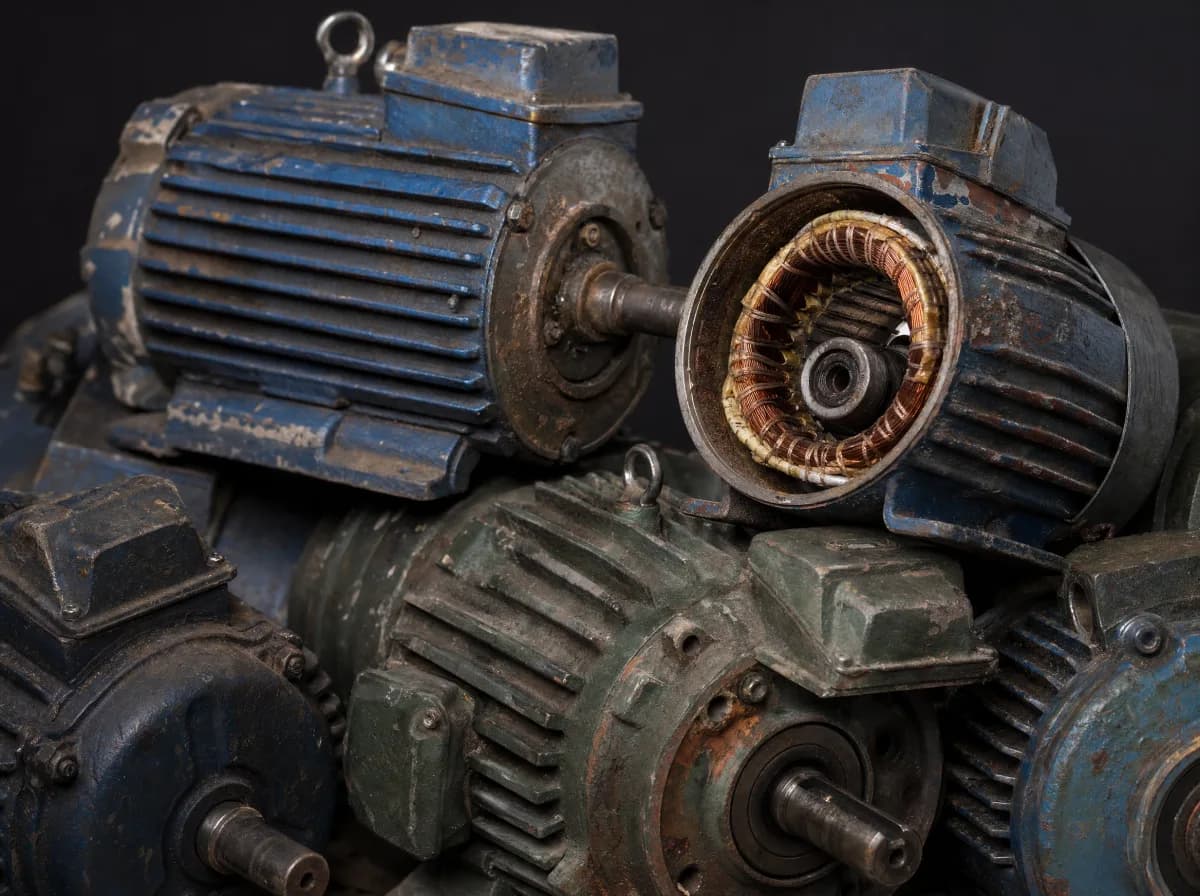
ELECTRIC MOTOR SCRAP
Electric motor and alternator scrap
Electric motors are a separate, very large category for us — from alternators and starters out of vehicle dismantling to large industrial motors. We price by the real copper content.
What we buy in motors
The value of an electric motor comes mainly from the copper in its windings — and that varies by type. An alternator, a starter, a mixed motor and a large industrial motor give different yields, so we settle them separately instead of weighing everything at one price.
We collect steady streams from vehicle dismantlers, power utilities and industry. We accept motors complete — you don’t have to strip them to get a fair quote.
Motors and electrical assemblies from automotive and industry. Pricing depends on the type and the copper content.
Alternators
Complete car alternators — one of the most common and readily bought items.
Starters
Car starters — settled separately from alternators because of the different copper yield.
Electric motors up to 150 kg
Industrial and workshop motors up to about 150 kg — the most common grade in this group.
Electric motors 150–1000 kg
Medium and larger units — the brackets up to 500 kg and above 500 kg are classified separately.
Large motors (over 1 t)
High-power industrial motors — priced individually, with our own collection available.
Motors with aluminium housings
Motors with an aluminium body — classified separately from cast-iron ones because of the different metal split.
Rotors
Rotors with copper windings — mixed copper rotors and alternator rotors are settled separately, as their yields differ.
Stators
Stators with copper windings, including small units — classified separately from rotors.
Transformers
Small copper-wound transformers and larger transformers — classified by the type of winding.
What's in it for you.
No need to strip anything
We accept motors complete and recover the copper ourselves. You save the work, and we price fairly against what’s actually inside.
A separate price per type
An alternator, a starter and a mixed motor have different copper yields. We settle them separately, so a load sorted by type gains in value.
Collection of large motors
Motors over a tonne and full truckloads we can collect with our own transport when needed. The logistics come off your shoulders and production keeps moving.
Where to sell your electric motors
We buy electric motors at every non-ferrous branch. For large motors and whole loads, ask about our own collection.
- Warszawa TargówekPrzecławska 2, 03-879 Warszawa · +48 516 041 683
- OtwockKraszewskiego 2A, 05-400 Otwock · +48 601 336 906
- ŁódźOkopowa 70/106, 91-849 Łódź · +48 506 054 883
- Poznań (Gądki)Zbożowa 1a, 62-023 Gądki · +48 505 118 482
- WrocławOpolska 19c, 52-010 Wrocław · +48 609 889 966
- BędzinSielecka 63, 42-500 Będzin · +48 601 367 273
- Gdynia (Trójmiasto)Handlowa 10, 81-061 Gdynia · +48 504 231 190
- Biała Podlaska · Jana Pawła IIal. Jana Pawła II 200, 21-500 Biała Podlaska · +48 602 892 944
- Biała Podlaska · BiałkaBiałka 59, 21-500 Biała Podlaska · +48 501 492 204
Quality standards
We buy industrial and automotive motors and assemblies — complete and with their windings intact. Burnt-out material or units stripped of copper are priced accordingly lower, because it’s the copper that carries the value.
The metal content of unusual units we confirm by measurement on the spot. That way the price reflects the real yield rather than an assumption made up front.
A mixed load must not contain refrigeration compressors from fridges or air conditioners, wiper motors, electronics, PCBs or water pumps — we deduct those from the delivery and settle them separately. The fine fraction below 30 cm we check more carefully, because very often it no longer holds any motors, only contamination.
Electric motors — frequently asked questions
Do you have to strip a motor before selling it?
No. Odylion accepts motors complete and recovers the copper itself, so you save the dismantling work. The price still reflects what is actually inside — the real copper content of the windings.
Why are alternators and starters priced separately?
Because their copper yields differ. The value of an electric motor comes mainly from the copper in its windings, and that varies by type. So alternators, starters, mixed motors and large industrial motors are settled separately — a load sorted by type gains in value.
Do you accept large industrial motors over a tonne?
Yes. High-power motors over 1 t are priced individually, and for such units and full truckloads Odylion can arrange collection with its own transport when needed — the terms are set on the basis of the quantity, material and location.
How do you classify motors by size?
In several weight brackets, because the copper yield changes with the size of the unit. Odylion separates motors up to 150 kg, medium units up to 500 kg, motors above 500 kg and large units over 1 t. Motors with aluminium housings form their own grade, classified differently from cast-iron bodies because of the different metal split.
How much is a burnt-out motor or one without windings worth?
Distinctly less, because it is the copper that carries the value. The motors and assemblies bought here are complete, with their windings intact; burnt-out material or units stripped of copper are priced accordingly lower.
Besides motors, do you accept rotors, stators and transformers?
Yes. Dismantled motor parts — rotors and stators with copper windings — as well as small and larger transformers are fully-fledged items in this group. Rotors are not a single grade: mixed copper rotors and rotors taken from alternators have different copper yields and are therefore settled separately.
How do you confirm the copper content of an unusual unit?
By measurement on the spot. The metal content of unusual units is confirmed at the branch, so the price reflects the real yield rather than an assumption made up front.
What should not be in a load of mixed motors?
A mixed load must not contain refrigeration compressors from fridges or air conditioners, wiper motors, electronics, PCBs or water pumps — Odylion deducts them from the delivery and settles them separately, so putting them into a common load lowers the settlement for the whole batch. The fine fraction below 30 cm is treated separately as well: very often it no longer holds any motors, only contamination, which is why it gets checked more carefully. A load sorted at source simply settles higher.