
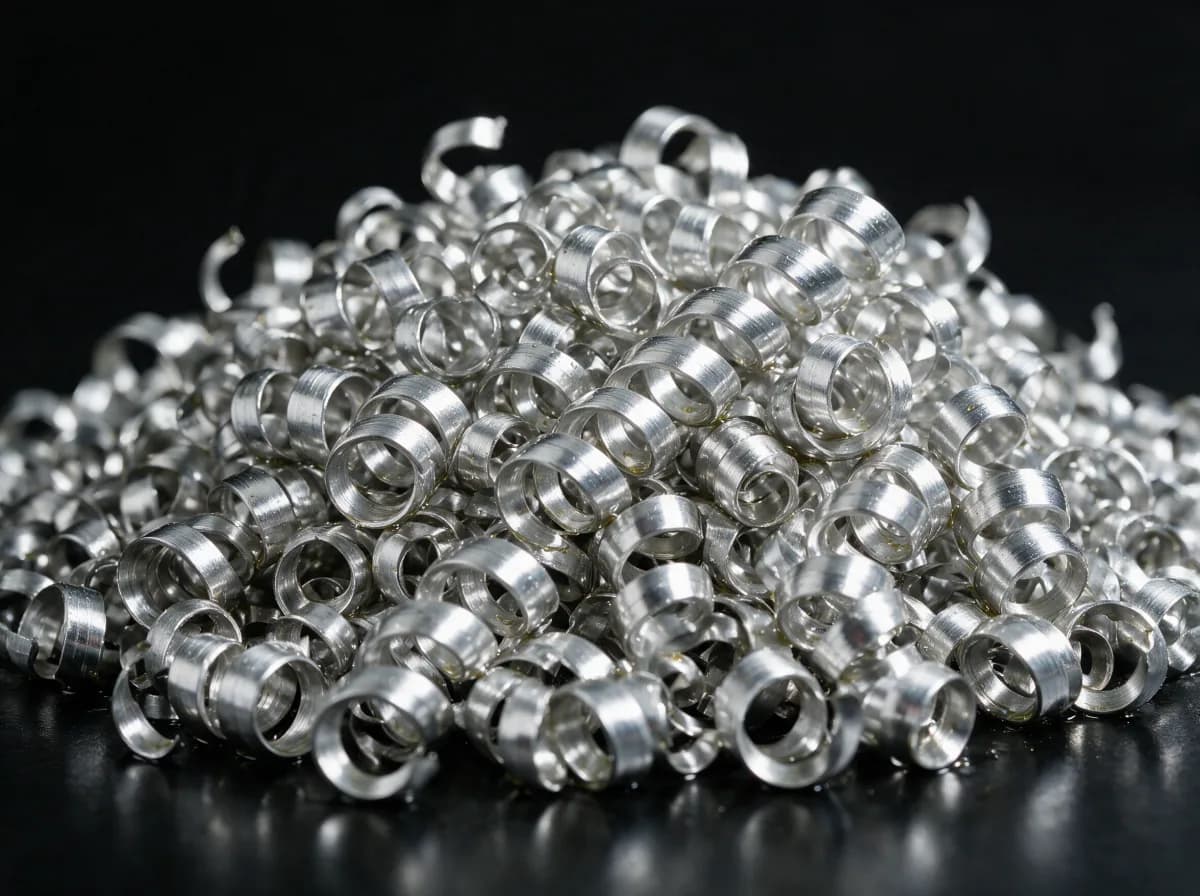
Metal turnings scrap from machining and forming
Do you run a machine shop, a press shop or a toolroom? Aluminium, copper and brass turnings, sheet offcuts, bar ends and blanking skeletons are one of the cleanest and most repeatable non-ferrous streams on the market — and we know it inside out. We price against current market quotations, when needed collect with our own transport on larger loads, and sell straight to smelters and foundries.
What we take from metalworking
Metalworking plants generate remarkably repeatable waste: turnings from turning and milling, offcuts from stamping, bar and profile ends, skeletons from blanking — batch after batch, the same grade off the same line. It’s material we price confidently and fast, because we know exactly what comes off the machine. You get paid for the actual grade — aluminium turnings as aluminium, brass as brass — not for a blended “metal mix”.
We serve machining and forming shops, press shops, toolrooms and precision-engineering plants. Whether you hand over a few bulk bags of turnings a week or full containers of sheet offcuts, you get priced for the actual grade — and, when needed, a collection that doesn’t hold up your production. Turnings are priced by cleanliness and moisture (emulsion lowers the grade), and we separate non-ferrous metals from steel so the more valuable fraction doesn’t get lost in the mix.
The most common waste streams from machining and forming. Not sure of the turnings’ grade? A photo is enough — we handle the rest.
Aluminium turnings
Turnings from turning and milling aluminium — priced by cleanliness and moisture; dry, uniform turnings are a higher grade.
Copper and brass turnings
The more valuable machining fraction — we separate copper from brass and settle each by cleanliness, so it isn’t lost in the mix.
Forming offcuts and waste
Sheet offcuts from stamping and bending and production blanks — thin, uniform material with a good yield.
Bar and profile ends
Waste from cutting stock material — ends of bars, profiles and tube; a clean, repeatable fraction from stock preparation.
Rejected blanks and blanking skeletons
Rejected parts and skeleton waste from blanking and cutting sheet — settled by the grade of metal.
Special-metal turnings
Turnings and offcuts of stainless steel, titanium alloys and high-speed steel (HSS) from toolrooms — we confirm the grade with a handheld spectrometer on site.
How we collect turnings and waste
A steady stream of turnings needn’t take up your yard or your time. We agree the terms once, and then collection runs in the background of your production.
Show us the material
Call or send photos of the turnings and offcuts on WhatsApp. The type of metal and a rough quantity are all we need to quote a rate within one business day.
We agree pricing and collection
We price against current market quotations and grade, and confirm an unusual alloy with a spectrometer. For repeat deliveries we agree terms up front, while transport, bulk bags and containers are arranged individually.
We weigh and settle
We weigh in front of you on authorised scales, you get the documents appropriate to the delivery and a settlement with no surprises. The material goes straight to smelters and foundries.
Related groups and knowledge
Metalworking mostly yields aluminium turnings — but copper, brass and special alloys come off the same machine too, and we classify and settle each one separately.
Worth knowing
Metalworking — frequently asked questions
What lowers the grade of turnings from machining?
Above all emulsion and moisture, and mixed grades. Turnings are settled by cleanliness and moisture — dry, uniform turnings are a higher grade than heavily oiled turnings or turnings mixed with another metal.
Is it worth separating aluminium turnings from brass ones?
Yes. Copper and brass turnings are a more valuable fraction than aluminium ones — they are separated and settled individually by cleanliness, so the more valuable metal does not get lost in the mix. Separating the streams at source makes classification easier and allows each item to be priced on its own.
Do you accept stainless steel, titanium and HSS turnings?
Yes. Turnings and offcuts of stainless steel, titanium alloys and high-speed steel (HSS) from toolrooms are accepted, and their grade is confirmed with a handheld spectrometer at the branch.
Do you provide bulk bags and containers for turnings?
Transport, bulk bags and containers are arranged individually — on the basis of the quantity, type of material and the plant’s location. For repeat deliveries the terms are agreed up front, so collection runs in the background of production.
What about blanking skeletons and rejected blanks?
Rejected parts and skeleton waste from blanking and flame-cutting sheet are accepted and settled by the grade of metal — just like offcuts from stamping and bending, and the ends of bars, profiles and tube from cutting stock material.
Do non-ferrous metals have to be separated from steel?
It is worth it, and it pays. Non-ferrous metals are separated from steel during classification precisely so that the more valuable fraction is not settled as ferrous scrap — the better separated the stream that arrives at the branch, the higher the grade of the delivery.